
Corporate social responsibility examples begin with trust. When someone donates, they believe their contribution will be handled with care and transformed into something meaningful. At dlivrd Difference, every donation is treated as a responsibility to people, communities, and long-term progress.
Many donors want to help, but too often they are left wondering where their money actually goes. Lack of transparency can create distance between generosity and results, even when intentions are good.
Clear accountability matters because real people are on the other side of every contribution. Families need support. Students need opportunity. Communities need consistent investment, not one-time gestures. That is why dlivrd Difference is committed to showing how donations move from intention to action.
Transparent reporting and measurable benchmarks help close that gap between generosity and visible outcomes. Donors deserve clarity about how resources are allocated, what goals are being pursued, and how progress is evaluated over time. By communicating impact consistently and openly, organizations strengthen trust, reinforce accountability, and ensure that every contribution supports structured, sustainable initiatives rather than temporary solutions.
1. Skills-Based Volunteering That Strengthens Communities
Salesforce encourages employees to contribute professional expertise, not just time, through its well-known 1% philanthropy model. Teams provide nonprofits with technology support, operational strategy, and systems implementation.
This approach strengthens nonprofit capacity in lasting ways. Instead of short-term volunteer hours, organizations gain tools and knowledge that improve long-term performance. Skills-based CSR initiatives like this create scalable nonprofit impact while giving employees meaningful engagement.
2. Environmental Responsibility With Measurable Accountability
Microsoft has committed to becoming carbon negative and publicly reports progress toward its environmental goals. Its sustainability programs include emissions tracking, supplier accountability standards, and investments in environmental innovation.
Transparency plays a central role. By openly sharing milestones and challenges, Microsoft reinforces credibility. Among leading CSR initiatives, measurable sustainability commitments demonstrate how ethical business practices build trust with stakeholders.
3. Expanding Education Access Through Long-Term Investment
Intel invests in scholarships, STEM education initiatives, and workforce readiness programs for underrepresented communities. Rather than focusing on short-term publicity, the company prioritizes long-term economic mobility.
Education-focused CSR initiatives help create opportunity pipelines that benefit individuals, families, and industries. Sustainable community support begins with access to knowledge and skills.
4. Community Investment Rooted in Local Needs
Target directs significant resources toward local education programs, disaster relief efforts, and neighborhood-based initiatives. By partnering with trusted community organizations, the company ensures funding aligns with real, verified needs.
Community support works best when it is locally informed. This model highlights how responsible business initiatives succeed when companies listen before acting.
5. Ethical Supply Chains and Worker Wellbeing
Unilever integrates ethical sourcing and fair labor standards across its supply chain. Its sustainability programs include supplier codes of conduct, public reporting, and worker wellbeing initiatives.
CSR initiatives that extend beyond finished products demonstrate deeper responsibility. Ethical business practices strengthen global supply networks while protecting the people who make operations possible.
6. Global Volunteering With Local Impact
Accenture coordinates global volunteering programs that empower employees to support local nonprofits. By combining international structure with local execution, the company strengthens both team engagement and community outcomes.
This approach illustrates how corporate social responsibility examples can scale without losing community focus. Coordinated action ensures consistency while preserving local relevance.
Why These Corporate Social Responsibility Examples Matter
These initiatives show that impact is not about scale alone. It is about intention, accountability, and sustained investment. Effective CSR initiatives connect business strategy with measurable community outcomes.
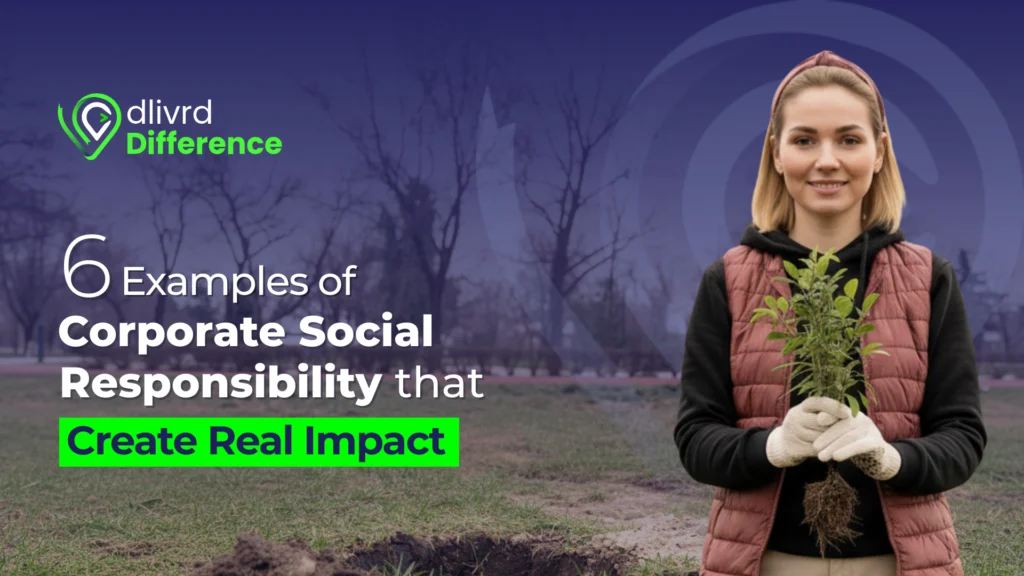

When companies prioritize sustainability programs, education access, nonprofit impact, and ethical business practices:
Communities gain long-term stability
Employees feel aligned with purpose
Trust grows between organizations and stakeholders
Responsible business practices deliver results when they become part of operational culture rather than a one-time campaign. Businesses have the ability to expand opportunity, protect resources, and strengthen communities through everyday decisions.
Real CSR is not reactive. It is strategic, transparent, and built for long-term impact.